| Sunray 11 |
We supply Sodium Carboxymethyl Cellulose (CMC), Sodium Carboxymethyl Starch (CMS), Carboxymethyl Tamarind Kernel Powder (CMT/CMTKP), Monochloroacetic Acid (MCA), Sodium Monochloro Acetate (SMCA), Guar Gum Powder, Dolomite, Soapstone, Hydrated Lime, Marble Powder, Chalk Powder, Calcium Carbonate, Cotton Cake, Groundnut Meal, Castor Cake, Castor De Oiled Cake (Castor Meal), Neem Cake, Neem De Oiled Cake, Castor Oil Cold Press (Virgin), Neem Oil Cold Press (Virgin), Water Pump, Insecticide Sprayer, Ceramic Tiles and Sanitary Wares etc

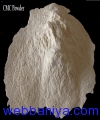
Sodium Carboxymethyl Cellulose (SCMC or CMC) or Cellulose Gum is an anionic water soluble polymer; it is derived from cellulose, which is made water soluble by a chemical reaction. The water solubility is achieved by introducing carboxymethyl groups (-CH2-COOH) along the cellulose chain, which makes hydration of the molecule possible. The chemical name of SCMC is SODIUM SALT OF CARBOXYMETHYL ETHER OF CELLULOSE. SYNONYMS Carboxymethyl Cellulose Sodium Salt, Sodium Cellulose Glycolate, Carboxymethyl Cellulose Sodium, CMC-Na, Na–CMC, Sodium CMC, Modified Cellulose, Cellulose Derivatives, Anionic Carboxy Methyl Cellulose, Anionic Modified Cellulose, Anionic Cellulose Derivatives, Cellulose Gum, CMC, Carboxymethyl Ethers of Cellulose, Sodium Salt of Carboxymethyl Ether of Cellulose. CAS NUMBER: 9004-32-4. CHEMICAL FORMULA: [C6H7O2 (OH) x (OCH2COONa) y] n Where n = degree of polymerization, x = 1.50 to 2.80, y = 0.2 to 1.50, x + y = 3.0 y = degree of substitution CMC is a white to creamish coloured powder consisting of very fine particles, fine granules. It is odor less and tasteless. It is a hygroscopic powder readily dissolves in water to form colloidal solution. It is insoluble in many organic solvents such as methanol, ethanol, propanol and acetone and so on. FUNCTIONS & PROPERTIES Sodium Carboxymethyl Cellulose (CMC) has the following functions and properties: 1) it acts as a thickener, binder, stabilizer, suspending agent and flow controlling agent. 2) It forms fine films that are resistant to oils, greases, and organic solvents. 3) It dissolves rapidly in cold water. 4) Acts as a protective colloid reducing water losses. 5) It is suitable for use in food systems. 6) It is physiologically inert. 7) It is an anionic polyelectrolyte. These properties and functions make it suitable for use in a broad range of applications in the food, pharmaceutical, cosmetic, paper, and other industries. To serve these diverse industries, CMC are available in three grades: HIGHLY PURIFIED, PURIFIED & TECHNICAL and in many types based on carboxymethyl substitution, viscosity, purity, particle size, and other parameters. APPLICATIONS CMC are widely use in Foods, Pharmaceuticals, Cosmetics, Textiles, Papers & Corrugated Boards, Detergents, Paints, Oil Well Drillings, Welding Electrodes, Pesticides, Ceramics, Tobacco, Mosquito Repellent Incense, Explosives, Batteries, Pencils, Leathers & other industries. PACKING 20Kg or 25Kg 2(two) ply paper bags or PP/HDPE laminated paper bags or PP bags + Inner plastic liner or as per availability.
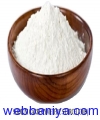
SODIUM CARBOXYMETHYL STARCH (CMS or SCMS) is a starch ether derivative derived from starch. It is soluble in water at room temperature and forms a transparent to light milky and viscous solution. CMS is an important modified starch with unique properties due to the presence of negatively charged functional group (CH2COO-). The introduction of carboxymethyl groups interrupts the ordered structure of native starch and intervenes with the re-association of gelatinized starch. This modification yields starch with decreased gelatinization temperature, increased solubility and improved storage stability. CMS is chemically processed carbohydrate typically derived from Native starch viz. Maize, Potato, Tapioca & Rice. These Sodium Carboxy Methyl starch and solution are alkaline in nature and have the capacity to replace sodium car-boxy methyl cellulose in fields like textile sizing and printing, corrugated paper, paper sizing, oil well drilling, water based distemper, oil bound distemper, electrodes, ceramics, pesticides, foundry, adhesives and others. The chemical name of SCMS is SODIUM SALT OF CARBOXYMETHYL ETHER OF STARCH SYNONYMS Carboxymethyl Starch Sodium Salt, Sodium Starch Glycolate, Carboxymethyl Starch Sodium, CMS-Na, Na-CMS, Sodium CMS, Modified Starch, Anionic Carboxy Methyl Starch, Anionic Modified Starch, Starch Gum, CMS, Carboxy Methyl Ethers of Starch. CAS NUMBER: 9063-38-1. PROPERTIES 1) White or light yellow powder. 2) Insoluble in ethanol, ether, acetone and other organic solvents. 3) Easily soluble in cold water, immediate intake water and swell in 15 minutes. 4) Absorption of water is 30 times comparing to original volume. 5) In the presence of acid and metal salts, will produce a white turbidity or precipitation. 6) Biodegradable and non-toxic. REASONS TO USE 1) Odorless and tasteless. 2) It is easily soluble, even in cold water. 3) Work as Binder, thickener, Suspending aid, stabilizer, Emulsifier. 4) Forming protective film. 5) Improving rheological properties. 6) Preventing growth of crystals. 7) Improving structure and texture and giving body. 8) Freeze/thaw stabilization. 9) Many grades are available for various kinds of applications 10) Help in preservation for long duration. 11) Better resistance towards micro-organisms. APPLICATIONS CMS has a wide range of applications in industries, mostly used for purposes of thickening, stabilization, water preserving, etc. In pharmaceutical industry, CMS, also known as sodium starch Glycolate, is commonly used as disintegrate. It is also used in textile industry as thickening agent in textile printing paste and as sizing agent especially for hydrophilic yarn. Another closed related material is carboxymethyl cellulose (CMC), which has been used intensively in similar industries. However, CMS not only has many advantages over CMC, but comes with a much lower price tag. Therefore, CMS is poising to replace CMC in many of industrial applications. CMS are widely used in Oil Well Drilling, Textile, Paper & Corrugated Board, Detergent, Welding Electrodes, Food, Pharmaceutical, Pesticides, Cosmetic, Toothpaste, Paint, Mining and Ceramic Industries. PACKING 20Kg or 25Kg 2(Two) ply paper bags or PP/HDPE laminated paper bags or PP bags + Inner plastic liner or As per availability.

Carboxymethyl Tamarind Kernel Powder (CMT or CMTKP) is an anionic water soluble polymer; it is derived from Tamarind Kernel Powder (TKP), which is made cold water soluble by a chemical reaction (Carboxymethylation). Cold water solubility is achieved by introducing carboxymethyl groups (-CH2-COOH) along the polysaccharide chain, which makes hydration of the molecule possible in cold water. CMT is modified Tamarind Kernel Powder (TKP), TKP extracted from seeds of Tamarind Tree (Tamarindus Indica). Tamarind is an evergreen tree grows mainly in India & also in other part of world. Today; India is the largest producer of tamarind. Tamarind seeds are processed in to CMT by seed selection, seed coat removal, separation, hammer milling, grinding, sieving, chemical processing, drying, grinding and sieving. CMT is bio-compatible, bio-degradable, non- toxic & modified natural polymer. CMT is derivatives of Polysaccharides composed of Glucosyl : Xylosyl : Galactosyl in ration of 3:2:1. CMT is water solutions are Non-Newtonian and yield higher viscosities than most of starch derivatives at equivalent concentrations. SYNONYMS Carboxymethyl Tamarind Powder, Cold Water Soluble Tamarind Seed Powder, Cold Water Soluble Tamarind Kernel Powder, Cold Water Soluble TKP, Modified Tamarind Seed Powder, Modified TKP, Modified Tamarind Kernel Powder, Modified Natural Polymer, Hydrocolloids, TKP Derivatives, Tamarind Kernel Powder Derivatives, Tamarind Derivatives, Modified Gum, Cold water soluble Gum, CMT, Sodium CMT, Na-CMT, CMT-Na, Carboxy Methyl TKP, CMTKP, Sodium CMTKP, Na-CMTKP, Sodium Carboxy Methyl TKP, Sodium Carboxy Methyl Tamarind Gum, Anionic Carboxy Methyl Tamarind Gum, Anionic Tamarind Gum, Anionic Gum, Carboxy Methyl Tamarind Sodium Salt, Sodium Salt of Carboxy Methyl Tamarind Kernel Powder, Anionic etherified polysaccharides, Tamarind Gum. Tamarind Seed Gum, Textile Printing Thickeners, Printing Thickeners. The Chemical name of CMT is Sodium Carboxy Methyl Tamarind Kernel Powder. CAS NUMBER: 68647-15-4 EICS NUMBER: 271-943-5 APPLICATIONS 1) CMT widely used as textile printing thickener. 2) CMT also used for sizing in jute yarn & cotton warp. 3) CMT has extensive use in paper & explosive industry where it is used as viscosity builder. 4) CMT used as a binder in slurry explosive as a substitute for guar gum. 5) CMT used as a core binder in foundries & mosquito coils. 6) CMT used as a sizing material in paper industry. 7) CMT very effectively used these days by oil drilling companies as soil stabilizer. 8) CMT has numerous other applications & its low cost gives it an edge over other thickening agents. PACKING: 25Kg PP/HDPE laminated paper bags or PP/HDPE bags + Inner plastic liner or as per availability.
SODIUM MONOCHLORO ACETATE (SMCA) (C2H2ClNaO2) is the sodium salt of Monochloroacetic Acid (MCA). Sodium Monochloro Acetate (SMCA) is obtaining from neutralization of Monochloroacetic Acid (MCA) with Sodium Carbonate (Soda Ash). Another method of manufacturing Sodium Monochloro Acetate (SMCA) is spraying molten Monochloroacetic Acid (MCA) together with 50 % Caustic Soda solution into a spray dryer. SYNONYMS Sodium Chloroacetate, Chloroacetic acid sodium salt, Monochloroacetic acid sodium salt, Monochloroethanoic acid sodium salt, Chloroethanoic acid sodium salt, SMCA, SMA, Monoxone. IUPAC NAME: Sodium 2-chloroacetate. CAS REGISTRY NUMBER: 3926-62-3 EC NUMBER: 223-498-3 UN NUMBER: 2659 CHEMICAL FORMULA: C2H2ClNaO2 PROPERTIES Appearance White colored free flowing fine powder Solubility Soluble in Water Molecular Weight 116.5 Hygroscopic, without any perceptible Odour, Toxic & Corrosive SPECIFICATIONS Chemical formula C2H2ClNaO2 Sodium Monochloro Acetate 98.00% Min (On dry basis) Sodium Dichloro Acetate 0.50% Max Sodium Chloride 0.50% Max Moisture Content 1.00% Max (When Packed) pH of 5% w/w Solution 5.5 to 8 APPLICATIONS Sodium Monochloro Acetate (SMCA) is use in the production of a wide variety of useful compounds such as drugs, dyes, agrochemicals and thickening agents. Most reactions take advantage of the high reactivity of the C–Cl bond. Applications are in Manufacturing of 1) Various Agrochemicals viz 2,4-D (2,4-dichlorophenoxyacetic acid), 2,4,5-T (2,4,5-trichlorophenoxyacetic acid), MCPA (2-methyl-4-chlorophenoxyacetic acid), Glyphosate and Dimethoate. 2) Drugs such as Vitamins, Synthetic Caffeine, Malonates, Glycine, Barbiturates etc 3) Amphoteric Surfactants which used in shampoos, baby and children cleansing formulations, shower and bath gels, body and facial washes and shaving foam, also in skin care products like cleansing milks or eye-make up removers. 4) Glycolic acid (Hydroxyacetic Acid), Thioglycolic Acid and Cyanoacetic Acid. 5) Textile Auxiliaries & Dyestuffs (Indigo) 6) Hydrocolloids such as Sodium Carboxy Methyl Cellulose (CMC), Sodium Carboxy Methyl Starch (CMS), Sodium Carboxy Methyl Tamarind (CMT), Sodium Carboxy Methyl Guar Gum (CMG). PACKING 25Kg or 50 Kg HDPE Bags with inner LDPE liner.

MONOCHLOROACETIC ACID (MCA) (ClCH2CO2H) is a colorless or white crystalline solid, highly hygroscopic, sharp odor, inflammable, soluble in water and common organic solvent. MCA is organochlorine compound is a useful building-block in organic synthesis. SYNONYMS: Chloroacetic acid, Chloroethanoic acid, Monochloroethanoic acid, MCAA, MCA. IUPAC NAME: Chloroacetic acid SYSTEMATIC IUPAC NAME: Chloroethanoic acid CAS REGISTRY NUMBER: 79-11-8 EC NUMBER: 201-178-4 UN NUMBER: 1751 CHEMICAL FORMULA: C2H3ClO2 PROPERTIES Appearance Colorless or White crystals Solubility Soluble in water & common organic solvents such as Methanol, Acetone, Diethyl Ether, Benzene, Chloroform, Ethanol Molecular Weight 94.50 Melting Point 63 Â DegreeC Boiling Point 189 Â DegreeC Specific Gravity 1.37 Setting Point 61 Â DegreeC to 62.5 Â DegreeC Highly Hygroscopic, Sharp Odor (Pungent), Inflammable, Toxic & Corrosive SPECIFICATIONS Chemical formula C2H3ClO2 Monochloroacetic Acid 99.00% Min Dichloroacetic Acid 0.50% Max Other Acid 0.50% Max APPLICATIONS Monochloroacetic Acid (MCA) is use in the production of a wide variety of useful compounds such as drugs, dyes, agrochemicals and thickening agents. Most reactions take advantage of the high reactivity of the C–Cl bond. Applications are in Manufacturing of 1) Various Agrochemicals viz 2,4-D (2,4-dichlorophenoxyacetic acid), 2,4,5-T (2,4,5-trichlorophenoxyacetic acid), MCPA (2-methyl-4-chlorophenoxyacetic acid), Glyphosate and Dimethoate are prepared by alkylation with MCAA. 2) Drugs such as Adrenaline (Epinephrine), Vitamins, Synthetic Caffeine, Malonates, Glycine, Barbiturates etc. 3) Amphoteric Surfactants which used in shampoos, baby and children cleansing formulations, shower and bath gels, body and facial washes and shaving foam, also in skin care products like cleansing milks or eye-make up removers. 4) Glycolic acid (Hydroxyacetic Acid), Thioglycolic Acid and Cyanoacetic Acid. 5) Textile Auxiliaries & Dyestuffs (Indigo). 6) Hydrocolloids such as Sodium Carboxy Methyl Cellulose (CMC), Sodium Carboxy Methyl Starch (CMS), Sodium Carboxy Methyl Tamarind (CMT), Sodium Carboxy Methyl Guar Gum (CMG). PACKING 25Kg or 50 Kg HDPE Bags with double inner LDPE liner.

Daltex Glass & Aluminum Inc is a trusted glass wholesaler and glass solutions provider in Farmers Branch, serving Dallas

Experience the thrill of River Rafting in Rishikesh with Himalayan Tiger Adventure Rishikesh! 🌊 Enjoy exciting rapids

Experience the thrill of River Rafting in Rishikesh with Himalayan Tiger Adventure Rishikesh! 🌊 Enjoy exciting rapids

Looking for the best River Rafting in Rishikesh price? 🌊 Enjoy an exciting adventure on the Ganga River with prices s

GTT Wireless designs and supplies IP67/NEMA6 outdoor electronic enclosures and antenna solutions for harsh environments.

GTT Wireless designs and supplies IP67/NEMA6 outdoor electronic enclosures and antenna solutions for harsh environments.

All State Estimation Canada is a Toronto base construction company provides construction estimating services for contra

All State Estimation Canada is a Toronto base construction company provides construction estimating services for contra

Selecting dependable wholesale supplement suppliers is an important decision for businesses that need consistent acce

Arktel Technologies provides reliable telecom and internet solutions for individuals and businesses. We offer Du interne

Established as a landscape architecture practice in 2000, Artemis bring a creative, yet pragmatic approach to projects r
MED-TECH WATER SYSTEMS, INC. is a water treatment equipment supplier specializing in reverse osmosis membranes, water fi
The Spectrum Ads is a premier advertising and brand consultancy agency based in Ranchi, Jharkhand, focused on delivering

ED and PE Products are designed to address two common male health concerns: erectile dysfunction (ED) and premature ejac

HIV/ARV Products play a vital role in the management and treatment of Human Immunodeficiency Virus (HIV). Antiretroviral

Colin Coatings Des Moines specializes in durable polyaspartic and epoxy floor coatings designed to withstand Iowa’s ro
Anavar Buy is a commonly searched keyword among individuals looking for information about purchasing the anabolic steroi

The Indian IPTV is a leading provider of Indian channel entertainment to direct the homes of thousands of people in the

Brighten Your Smile with Expert Dental Care | LiT Dental

Johnson’s Tree Care Inc. is a trusted Bay Area tree service serving homeowners, businesses and property managers in Sa