| Sodhani Biotique |
With environment as an inspiration and nature as our guide, we bring forth to you nature at its best through our natural dyes. All colors whether textile or other fibers are handcrafted by mixing and over-dying different dyestuff such as indigo, madder root, apsara, and sandal red etc producing over 40 shades.

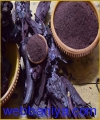
Jatropha Curcas is a non edible oil crop predominately used to produce bio-diesel. In addition to bio-diesel production, the by-product of Jatropha Curcas’ trans-esterification process can be used to make a wide range of products including high quality paper, energy pellets, soap, cosmetics, toothpaste, embalming fluid, pipe joint cement, cough medicine and as a moistening agent in tobacco. Potential as raw material for dye The bark of Jatropha curcas yields a dark blue dye which is reported to be used for colouring cloth, finishing nets and lines. The dye may be extracted from leaves and tender stems and concentrated to yellowish syrup or dried to blackish brown lumpy mass. The dye imparts to cotton different shades of tan and brown which are fairly fast.
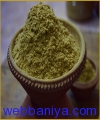
It is a medium sized dry season-deciduous tree, growing to 15 m tall. It is a slow growing tree, young trees have a growth rate of a few feet per year. The leaves are pinnate, with an 8–16 cm petiole and three leaflets, each leaflet 10–20 cm long. The flowers are 2.5 cm long, bright orange-red, and produced in racemes up to 15 cm long. The fruit is a pod 15–20 cm long and 4–5 cm broad. The flowers are used to prepare a traditional Holi colour. It is also used as a dyeing color for fabric. The uncontrolled discharge of synthetic dyes into the aquatic ecosystem is a global environmental concern due to their negative eco toxicological effects.Dyes obtained from different natural sources have emerged as an important alternative to synthetic dyes.
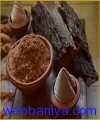
The bark, a by-product from timber plantations that is used for tanning and dyeing leather. The tannin produces a heavy leather which is firm, durable and hard, but combined with myrobalans (fromTerminalia species) it produces excellent leather. Bark tannin is used especially in Bengal and Bangladesh for dyeing cotton and wool into various shades of brown and into black by combining it with a mordant of iron sulphide or iron-rich mud. Acacia nilotica is a truly multipurpose tree, widely used as a timber, source of fodder, tannin and gum, and as a fence, shade and fuel tree.
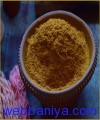
SAPPAN WOOD or East Indian red wood is a multipurpose tree. . It is botanically known as Caesalpinia Sappan. It is a natural dye yielding medicinal plant. The dye is used in colouring leather, silk, batik, calico printing, furniture, floors, feather, medicines and several handicrafts.In India it is cultivated in gardens and nurseries as a live fence plant in parts of Tamil Nadu, Kerala, Karnataka, Andhra Pradesh and West Bengal and nowhere is it found in the wild. Natural dye extracted from Caesalpinia sappan Linn. was applied to a cotton fabric and silk yarn by dyeing process. The dyestuff component of Caesalpinia sappan Linn. was extracted using water and ethanol. Analytical studies such as UV–VIS spectrophotometry and gravimetric analysis were performed on the extracts. Brazilein, the major dyestuff component of Caesalpiniasappan Linn. was confirmed in both aqueous and ethanolic extractsby UV–VIS spectrum. The color of each dyed material was investigated in terms of the CIELAB (L*, a* and b*) and K/S values. Cotton fabric dyed without mordant had a shade of reddish-brown, while those post-mordanted with aluminum potassium sulfate, ferrous sulfate and copper sulfate produced a variety of wine red to dark purple color shades. Cotton fabric and silk yarn dyeing was studied using aluminum potassium sulfate as a mordant. The observed color strength was enhanced with increase in mordant concentration.
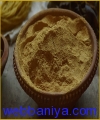
Pomegranate, with its deep red rind and ruby-colored flesh, is known as Anar in India and Granado in Spain. It grows wild in India, Italy, North Africa and China. A red dye is obtained from the flowers and also from the rind of unripened fruits. The dye can be red or black and it is also used as ink. It is coppery-brown in color. No mordant is required. A fast yellow dye is obtained from the dried rind. All parts of the tree have been utilized as sources of tannin for curing leather. The trunk bark contains 10 to 25% tannin. The root bark has a 28% tannin content, the leaves 11%, and the fruit rind as much as 26%. Both the rind and the flowers yield dyes for textiles, a jet-black ink can be made from it. Ink can be made by steeping the leaves in vinegar. The pale-yellow wood is very hard compact, close grained, durable, Used for making agricultural implements. A possible substitute for box, also used for walking-sticks and in woodcrafts. Pomegranate is an aromatic dye that yields an especially nice green-yellow color. The age of the fruit affects the color of the dye. The less ripe the fruit, the greener the yellow. Pomegranate has a high tannin content which when combined with iron gives a yummy deep moss green.

Built on Trust. Driven by Excellence. Since 2007, Smartbudgets USA LLC has been a trusted partner for government agencie

From luxury hotels and resorts to destination restaurants, our bespoke hospitality projects are thoughtfully shaped by t

We provide technology solutions to the trucking industry. We make and manufacture the BIT ELDs, BIT Air Scales and other

Billings Skin Care - Dr. Maranda and our dedicated staff will make sure you feel welcome and are always treated with the

Our flagship location. Indiana is home for Commonplace and for TJ, Julie, and the boys. It’s the kind of shop where ou

Best NDA Coaching in Kalka at Vidyapeeth School of Education.

Oil Service Sandpoint - At Taylor & Sons Chevrolet, our entire team works together to provide you with the ultimate Chev

For generations, Appalachians have powered America. We are determined to continue through the 21st century, with clean e

My Garden Supplies is your trusted online destination for high-quality gardening tools, accessories, and outdoor essenti

Best AI Courses in Jalandhar are practical programs designed to build skills in Artificial Intelligence, Machine Learnin
Dandong Foundry is a metal casting manufacturer in China. We are producing iron & steel castings by sand casting and los
Dandong Foundry is a metal casting manufacturer in China. We are producing iron & steel castings by sand casting and los
Dandong Foundry is a metal casting manufacturer in China. We are producing iron & steel castings by sand casting and los
Dandong Foundry is a metal casting manufacturer in China. We are producing iron & steel castings by sand casting and los
Dandong Foundry is a metal casting manufacturer in China. We are producing iron & steel castings by sand casting and los
Dandong Foundry is a metal casting manufacturer in China. We are producing iron & steel castings by sand casting and los
Dandong Foundry is a metal casting manufacturer in China. We are producing iron & steel castings by sand casting and los
Dandong Foundry is a metal casting manufacturer in China. We are producing iron & steel castings by sand casting and los

Here Counseling - Spokane is a private therapy practice providing in-person counseling in Spokane, WA and online therapy
Choosing the right grease trap service provider is critical for restaurants and commercial kitchens. At KW Environmental