| Sodhani Biotique |

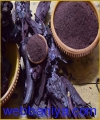
Jatropha Curcas is a non edible oil crop predominately used to produce bio-diesel. In addition to bio-diesel production, the by-product of Jatropha Curcas’ trans-esterification process can be used to make a wide range of products including high quality paper, energy pellets, soap, cosmetics, toothpaste, embalming fluid, pipe joint cement, cough medicine and as a moistening agent in tobacco. Potential as raw material for dye The bark of Jatropha curcas yields a dark blue dye which is reported to be used for colouring cloth, finishing nets and lines. The dye may be extracted from leaves and tender stems and concentrated to yellowish syrup or dried to blackish brown lumpy mass. The dye imparts to cotton different shades of tan and brown which are fairly fast.
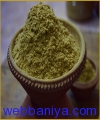
It is a medium sized dry season-deciduous tree, growing to 15 m tall. It is a slow growing tree, young trees have a growth rate of a few feet per year. The leaves are pinnate, with an 8–16 cm petiole and three leaflets, each leaflet 10–20 cm long. The flowers are 2.5 cm long, bright orange-red, and produced in racemes up to 15 cm long. The fruit is a pod 15–20 cm long and 4–5 cm broad. The flowers are used to prepare a traditional Holi colour. It is also used as a dyeing color for fabric. The uncontrolled discharge of synthetic dyes into the aquatic ecosystem is a global environmental concern due to their negative eco toxicological effects.Dyes obtained from different natural sources have emerged as an important alternative to synthetic dyes.
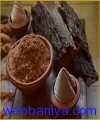
The bark, a by-product from timber plantations that is used for tanning and dyeing leather. The tannin produces a heavy leather which is firm, durable and hard, but combined with myrobalans (fromTerminalia species) it produces excellent leather. Bark tannin is used especially in Bengal and Bangladesh for dyeing cotton and wool into various shades of brown and into black by combining it with a mordant of iron sulphide or iron-rich mud. Acacia nilotica is a truly multipurpose tree, widely used as a timber, source of fodder, tannin and gum, and as a fence, shade and fuel tree.
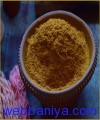
SAPPAN WOOD or East Indian red wood is a multipurpose tree. . It is botanically known as Caesalpinia Sappan. It is a natural dye yielding medicinal plant. The dye is used in colouring leather, silk, batik, calico printing, furniture, floors, feather, medicines and several handicrafts.In India it is cultivated in gardens and nurseries as a live fence plant in parts of Tamil Nadu, Kerala, Karnataka, Andhra Pradesh and West Bengal and nowhere is it found in the wild. Natural dye extracted from Caesalpinia sappan Linn. was applied to a cotton fabric and silk yarn by dyeing process. The dyestuff component of Caesalpinia sappan Linn. was extracted using water and ethanol. Analytical studies such as UV–VIS spectrophotometry and gravimetric analysis were performed on the extracts. Brazilein, the major dyestuff component of Caesalpiniasappan Linn. was confirmed in both aqueous and ethanolic extractsby UV–VIS spectrum. The color of each dyed material was investigated in terms of the CIELAB (L*, a* and b*) and K/S values. Cotton fabric dyed without mordant had a shade of reddish-brown, while those post-mordanted with aluminum potassium sulfate, ferrous sulfate and copper sulfate produced a variety of wine red to dark purple color shades. Cotton fabric and silk yarn dyeing was studied using aluminum potassium sulfate as a mordant. The observed color strength was enhanced with increase in mordant concentration.
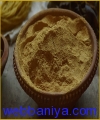
Pomegranate, with its deep red rind and ruby-colored flesh, is known as Anar in India and Granado in Spain. It grows wild in India, Italy, North Africa and China. A red dye is obtained from the flowers and also from the rind of unripened fruits. The dye can be red or black and it is also used as ink. It is coppery-brown in color. No mordant is required. A fast yellow dye is obtained from the dried rind. All parts of the tree have been utilized as sources of tannin for curing leather. The trunk bark contains 10 to 25% tannin. The root bark has a 28% tannin content, the leaves 11%, and the fruit rind as much as 26%. Both the rind and the flowers yield dyes for textiles, a jet-black ink can be made from it. Ink can be made by steeping the leaves in vinegar. The pale-yellow wood is very hard compact, close grained, durable, Used for making agricultural implements. A possible substitute for box, also used for walking-sticks and in woodcrafts. Pomegranate is an aromatic dye that yields an especially nice green-yellow color. The age of the fruit affects the color of the dye. The less ripe the fruit, the greener the yellow. Pomegranate has a high tannin content which when combined with iron gives a yummy deep moss green.
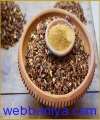
The corolla tubes are orange-coloured tubes found inside the flower and when severed from the hand give a beautiful fleeting orange or golden dye. Corolla tube contains a colouring matter, nyctanthin, which is identical with crocetin from saffron. The dye is mostly used for silk, sometimes in combination with turmeric. Half a seer of the dried corolla tubes will dye 60yards of silk cloth. Flowers are rich in yellow colouring matter, which is readily soluble in water. The infusion produces very bright yellow colour on mulberry silk when properly mordanted; and when the right procedure is used this dye-stuff appears to be eminently suited for dyeing tussar silk yellow. It has not such a great affinity for wool.
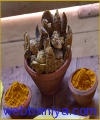
Curcuma longa is the botanical name of a ginger plant belonging to the family of zingiberaceae(Merck, 1989 and Kochlar, 1986). It contains a colourful condiment with a distinctive pungent flavour. The natural product (curcuma longa) has a chief colourant as curcumin (turmeric yellow) soluble in alcohols and insoluble in water and ether and the pH range is 8.0-9.0. The plant is largely used as a spice in cooking, colouring varieties of materials such as foods, drugs and textiles (Odilora, 2001). Medicinally, curcuma longa is used to aid digestion and as blood purifier when the water solution is drank. In addition, the yellow turmeric paper can be used for testing alkalinity. Curcuma longa is pink in base and yellow in acid (Gill, 1992). It was observed that the titrimetric end-points obtained for the dye present in curcuma longa compared reasonably with those of methyl orange. We strongly recommend that the dye from curcuma longa can be used as alternative to methyl orange during titrimetric analysis.
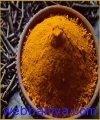
Madder has been cultivated as a dyestuff since antiquity in central Asia and Egypt, where it was grown as early as 1500 BC. Cloth dyed with madder root pigment was found in the tomb of the Pharaoh Tutankhamun . Madder was widely used as a dye in Western Europe in the Late Medieval centuries. In 17th century England, alizarin was used as a red dye for the clothing of the parliamentary New Model Army. The distinctive red color would continue to be worn for centuries. By 1804, a dye maker in Britain had refined a technique to make lake madder by treating it with alum, and an alkali, that converts the water-soluble madder extract into a solid, insoluble pigment. This resulting madder lake has a longer-lasting color, and can be used more efficaciously. Alizarin changes color depending on the pH of the solution it is in, thereby making it a pH indicator. Alizarin is the main ingredient for the manufacture of the madder lake pigments known to painters as Rose madder and Alizarin crimson. Alizarin in the most common usage of the term has a deep red color. A notable use of alizarin in modern times is as a staining agent in biological research because it stains free calcium and certain calcium compounds a red or light purple color. Alizarin continues to be used commercially as a red textile dye, but to a lesser extent than 100 years ago.
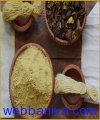
Myrobalan is a commonly used dye throughout India and grows primarily in the foothills of the Himalayas. It is an upright tree with small oval leaves and lovely bright yellow flowers. It has always been used as a primary component for cotton dyeing in India and is often employed as a mordant prior to creating brown and black on cotton fabrics. It extract over dyed with indigo makes a beautiful teal color. Using higher percentages of myrobalan yield a brownish yellow, while the lower percentages yield percentages yield a light buff color.
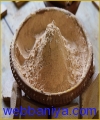
Cutch is an important historical brown dye which is obtained from the left over of kattha produced from Acacia catechu. Kattha is used as an edible paste in pan preparations. It is a very easy dye to use and it is both light-fast and wash-fast, as well as being inexpensive. Cutch is an excellent dye for cottons as it is high in tannins, and it is also suitable for silk and wool. Cutch gives warm golden browns and fawns and it is a very good dye to use in mixtures. Over dyed with indigo it gives beautiful dark grey greens. For dark browns, Liles recommends using a mixture of cutch, logwood and a yellow dye like weld or fustic. It is used mainly on cotton as it is very high in tannin and can be used as a mordant instead of tannic acid but it can also be used on silk and wool. Cutch contains two dyes, catechu-tannic acid, which is soluble in cold water, and catechin, which needs hot water to dissolve. Cutch is a difficult dye to exhaust and will continue to produce beige colours for several more skeins. Cardon recommends exposing the fibres to the air to oxidise the dye before rinsing the dyed fibres.
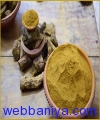
RHEUM EMIDO is one such natural colorant found in the sub-alpine and alpine Himalayas at an altitude of 3000–5000 meters. Rheum emodi is a medicinal herb and belongs to the family Polygonaceae. The Indian rhubarb (Rheum emodi) commonly known as “Dolu (Sanskrit: Amlaparni, Revatchini) are reported to be used for curing of a variety of diseases, its main effect being a positive and balancing effect upon the whole digestive system. The rhizomes and roots of Rheum emodi yield a yellow coloring matter, which could be used for textile coloration. The plant contains 3–5% anthracene derivatives. In the plant the anthraquinoid components are present in reduced form as anthraglycosides, which hydrolyze and oxidize to the respective anthraquinone. The extracted dye contains a complex mixture of anthraquinones; relevant compounds are Emodin, Chrysophanol, Aloeemodin, Rhein, and Physcion and the chief colouring component is chrysophanic acid. The formation of complexes due to the presence of metal salt from mordanting considerably improves dye uptake and all round fastness properties. Mordant brings about change of the hue of the natural colorants, which can be utilized with advantage to produce different shades on protein and cellulosic substrates. Keeping environment related issues and adoption of cleaner technology in view, inorganic salts such as, aluminium sulphate, potash alum, and ferrous sulphate can be employed as mordanting agent in view of their good complex forming ability and environmental safe character.
Kerria lacca is a species of scale insect of the family Kerriidae. It is most well known for secreting lac a commercially important scarlet substance that is used for dyeing wool and silk, as a cosmetic, and as a medicinal drug. Kerria lacca insects inhabit trees in colonies of thousands and secrete the resinous substance. Kerria lacca excretions can be processed to produce shellac, which is used as an ingredient in wood finishing varnishes and polishes such as French Polish. This is a natural red dye and is obtained by washing the raw stick lac by water and then precipitating the filtered wash liquor with acid. The main colouring component is Laccaic acid.
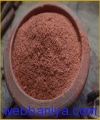
Madder is an evergreen plant native to the Old World. This plant has historically been used as a source of animal fodder, but it was commercially important for its red root, which was used to manufacture a dye known as madder or rose madder. Madder roots produce a variety of reds including orange reds, brick red, blood red and fiery reds. The colour depends on the soil the roots where grown, their age, the mineral content of the water used for dyeing, the temperature of the dye pot, and how much madder you use in relation to the fibre. You can dye with madder either cold or with heat. Add chalk and avoid high temperature to get better reds. Several dyers recommend mordanting the wool just with alum, not using cream of tartar as well. Madder can be used on cotton, leather, wool and silk.

These are the blue dyes, especially indigo, derived primarily from the indigofera, isatis and polygonum species. Several species, especially indigofera tinctoria and indigofera suffruticosa, are used to produce the dye indigo. Natural indigo is obtained by fermenting the leaves of various species of Indigofera, running off the liquor and oxidizing it to precipitate the dye. The dye is precipitated by oxidation or by passing the air. The precipitated blue natural dye at bottom is dried in the air to make the cake. This is a vat dye and is used after converted into liquid form with sodium hydrosulphite and caustic soda in soft water. The dyeing is carried out in the reduced liquid form at about 25oC to 30oC. By oxidation, the dyed fabric slowly changes into blue colour form green.The process of dyeing of cotton, wool and silk is almost same. The appearance of dye is blue and main colouring compound is Indigotin.
Petrocarpus Santlus, with the common names Red Sanders, Red Sandalwood, and Saunderswood, is a species of Pterocarpus endemic to the southern Eastern Ghats mountain range of South India. This tree is valued for the rich red color of its wood. The wood is not aromatic. The tree is not to be confused with the aromatic Santalum Sandalwood trees that grow natively in South India. The chief use of Red Saunders wood is as a dye-stuff. In India it is employed mixed with sapan wood, for dyeing silk, cotton and wool, the shade of red varying according to the mordant used. Red Sandalwood’s natural dye.

MedAxis – MBBS Abroad Admissions, FMGE Coaching & Medical Career Guidance MedAxis is a trusted medical education consu

Finding the right land in an emerging market starts with choosing the right information, location and property type. Ved

Delhi Car Rental with Driver offers reliable, safe, and affordable chauffeur-driven car rental services for local travel

Delhi Car Rental with Driver offers reliable, safe, and affordable chauffeur-driven car rental services for local travel

Delhi Car Rental with Driver offers reliable, safe, and affordable chauffeur-driven car rental services for local travel
Crest Travel Club is a disruptive, members-only platform built to eliminate the steep markups of traditional travel book

Nawab Car Rental Mumbai offers reliable, affordable, and comfortable cab services across Mumbai and nearby cities. We pr
ZSS security services is a leading security services company, provides best-in-class security guard services in Noida.Ou

Experience the therapeutic benefits of pinda sweda ayurvedic treatment at Shattayu Ayurveda, where traditional Ayurvedic

CrossDigi is a trusted digital marketing agency in Valdosta, GA, helping businesses build a stronger online presence and

CrossDigi is a trusted digital marketing agency in Valdosta, GA, helping businesses build a stronger online presence and

CrossDigi is a trusted digital marketing agency in Valdosta, GA, helping businesses build a stronger online presence and

CrossDigi is a trusted digital marketing agency in Valdosta, GA, helping businesses build a stronger online presence and
Stansted Airport Taxi provides dependable and professional airport transfer services throughout London and the UK, offe
Crossdigi is a premier digital marketing agency dedicated to helping businesses scale through data-driven online strateg

Create inspiring spaces with Shayona Consultant, a trusted Architect In Rajkot delivering innovative architectural solut

Cloud Patrons Info Solutions is a trusted technology partner delivering Managed Cloud Support, Managed IT Services, 24Ă—

NextMark UK is a Manchester-based digital agency helping businesses across the UK grow through affordable and results-

Hunterdon Otolaryngology & Allergy Associates offers excellence in the field of Otolaryngology-Head & Neck Surgery. We a

Hunterdon Otolaryngology & Allergy Associates offers excellence in the field of Otolaryngology-Head & Neck Surgery. We a